Sewage Backup Cleanup in Butler-Tarkington: Safe Removal Guide
At 10:47 on a Tuesday night, a Butler-Tarkington homeowner called Butler-Tarkington Water Restoration because her finished basement smelled like a barn and the floor drain was bubbling gray water onto her laminate. She had two kids asleep upstairs, a wet shop vac she'd already given up on, and a panicked question: is this stuff actually dangerous, or am I overreacting? She wasn't overreacting. What came up that drain was Category 3 water under IICRC S500 standards, and the answer is never a wet/dry vac and a bottle of bleach.
Stories like hers are the reason this page exists. Since 2018, Butler-Tarkington Water Restoration has walked into hundreds of sewage backups across central Indiana, and the pattern is almost always the same: a homeowner who was told it would be a quick fix, a contractor who underestimated the contamination, and a family that ended up paying twice. We are IICRC certified, BBB A+ rated, and if your situation does not actually need a full mitigation, we will tell you directly. Below are real field experiences from Butler-Tarkington and surrounding neighborhoods, with the numbers, decisions, and steps woven in so you know what to expect when you call.
Quick Answer: What To Do in the First 15 Minutes
Sewage backup is classified as IICRC Category 3 water, the most contaminated level. Evacuate the area, shut off electricity to affected rooms at the breaker if safe, do not run water or flush toilets, and call a certified sewage cleanup crew. Most Butler-Tarkington homeowners insurance policies cover sudden sewage backup only if you carry a specific sewer backup rider, so document everything with photos before cleanup begins.
When To Call Butler-Tarkington Water Restoration
If sewage is in your Butler-Tarkington home right now, do not wait until morning. Every hour the contamination sits, more porous material is lost and the rebuild scope grows. Butler-Tarkington Water Restoration answers the phone 24 7, arrives with proper containment and PPE, and works directly with your adjuster so you are not stuck translating insurance language at midnight. If your situation is outside what we handle, we will tell you straight and refer you to the right specialist. Call when you are ready, we will take it from there.
Health Risks You Should Take Seriously
Sewage carries E. coli, hepatitis A, rotavirus, giardia, and a long list of other pathogens. Symptoms from exposure can show up 24 to 72 hours later. Keep children, elderly family members, and anyone immunocompromised completely out of the home until clearance testing is complete. If anyone develops fever, vomiting, or unexplained rash after exposure, contact your doctor and mention the sewage event by name.
Preventing the Next Backup
Once Butler-Tarkington Water Restoration finishes the cleanup, spend a weekend on prevention. Install a backwater valve on your main lateral, replace any failing sump or ejector pump, and schedule a camera inspection of the lateral every three to five years. Butler-Tarkington homeowners with mature trees should consider annual root foaming. These three steps, taken together, eliminate the majority of repeat backups we respond to.
What Insurance Actually Covers
Standard homeowners policies in Indiana exclude sewer backup unless you purchased an endorsement, usually called "water backup and sump overflow" coverage. Limits commonly run $5,000 to $25,000. Read your declarations page before you call your agent so you know what you are working with.
Documentation Checklist
- Wide and close photos of every affected room before any cleanup starts
- Video walkthrough with verbal description of damage
- Itemized list of damaged contents with approximate purchase dates and values
- Receipts for emergency mitigation, lodging, and replacement clothing
- Written cause of loss statement from your plumber or city utility
Working With Your Adjuster
Request that Butler-Tarkington Water Restoration send daily moisture logs, equipment placement diagrams, and disposal manifests directly to your adjuster. Adjusters approve scopes faster when the documentation arrives in the format they already use. If the carrier pushes back on the demolition scope, ask them to cite the specific IICRC standard they believe was violated. In most cases they cannot, and the scope gets approved.
What It Costs in Butler-Tarkington
Sewage cleanup pricing depends on volume, square footage, contamination depth, and how long the sewage sat. The longer it dwells, the more porous material is lost. Here is what Butler-Tarkington homeowners typically see.
| Scope | Affected Area | Typical Cost Range | Timeline |
|---|---|---|---|
| Toilet overflow, clean | Under 100 sq ft | $1,500 to $3,500 | 2 to 3 days |
| Basement backup, unfinished | 200 to 600 sq ft | $4,000 to $9,000 | 4 to 6 days |
| Finished basement, full | 600 to 1,200 sq ft | $10,000 to $25,000 | 7 to 14 days |
| Multi level or commercial | 1,200+ sq ft | $25,000+ | 2 to 4 weeks |
What Cannot Be Saved
Honesty matters here. Under Category 3 protocol, certain materials are non salvageable no matter how new they are.
- Carpet and carpet pad that contacted sewage
- Drywall and insulation up to 12 inches above the waterline
- Particleboard, MDF, and laminate flooring
- Upholstered furniture and mattresses
- Children's toys, stuffed animals, and cardboard storage
- enclosed wall spaces liner and filters in the affected zone
Hardwood, tile, concrete, sealed cabinetry, and most solid wood furniture can usually be cleaned and saved with proper protocol. We document everything we discard so your adjuster has a clear paper trail.
Why Sewage Backups Happen in Butler-Tarkington
Older clay sewer laterals, heavy spring rains overwhelming combined sewer systems, tree root intrusion, and grease buildup are the four most common causes we see. Homes built before 1980 are especially vulnerable because original laterals are reaching the end of their service life.
Common Triggers
- Mainline city sewer surcharge during heavy storms
- Tree roots cracking the lateral between house and street
- Flushed wipes, feminine products, or grease clogs
- Failed sump pump or ejector pump in basement bathrooms
- Frozen vent stacks in January and February
- Collapsed or bellied sections of older cast iron pipe
- Backflow preventer failure during municipal main breaks
Warning Signs Before a Full Backup
Most backups give you 24 to 72 hours of warning if you know what to watch for. Gurgling sounds from floor drains when you run the washing machine, multiple slow drains across different fixtures, sewer odor near the lowest drain in the house, or water rising in the basement shower when the toilet flushes upstairs all point to a partial blockage that is about to become a full one. Calling a plumber at this stage is dramatically cheaper than calling Butler-Tarkington Water Restoration after the fact.
The Safe Removal Sequence
Professional sewage cleanup is not a wet vac job. It follows a strict IICRC S500 and S540 sequence designed to protect your health and your structure. Skipping steps leads to mold, lingering odor, and failed insurance claims.
Step by Step
- Containment. Plastic sheeting and negative air machines isolate the affected zone so contamination does not spread to clean areas of your Butler-Tarkington home.
- PPE and extraction. Technicians wear full Tyvek suits, respirators, and gloves. truck mounted extractors pull standing sewage into sealed waste tanks.
- Demolition of porous materials. Drywall, insulation, carpet, pad, and particleboard within the contaminated zone must be cut out and bagged. These cannot be saved under Category 3 protocol.
- Cleaning and disinfection. Hard surfaces get a three step clean: detergent wash, EPA-registered hospital grade disinfectant, and a final wipe.
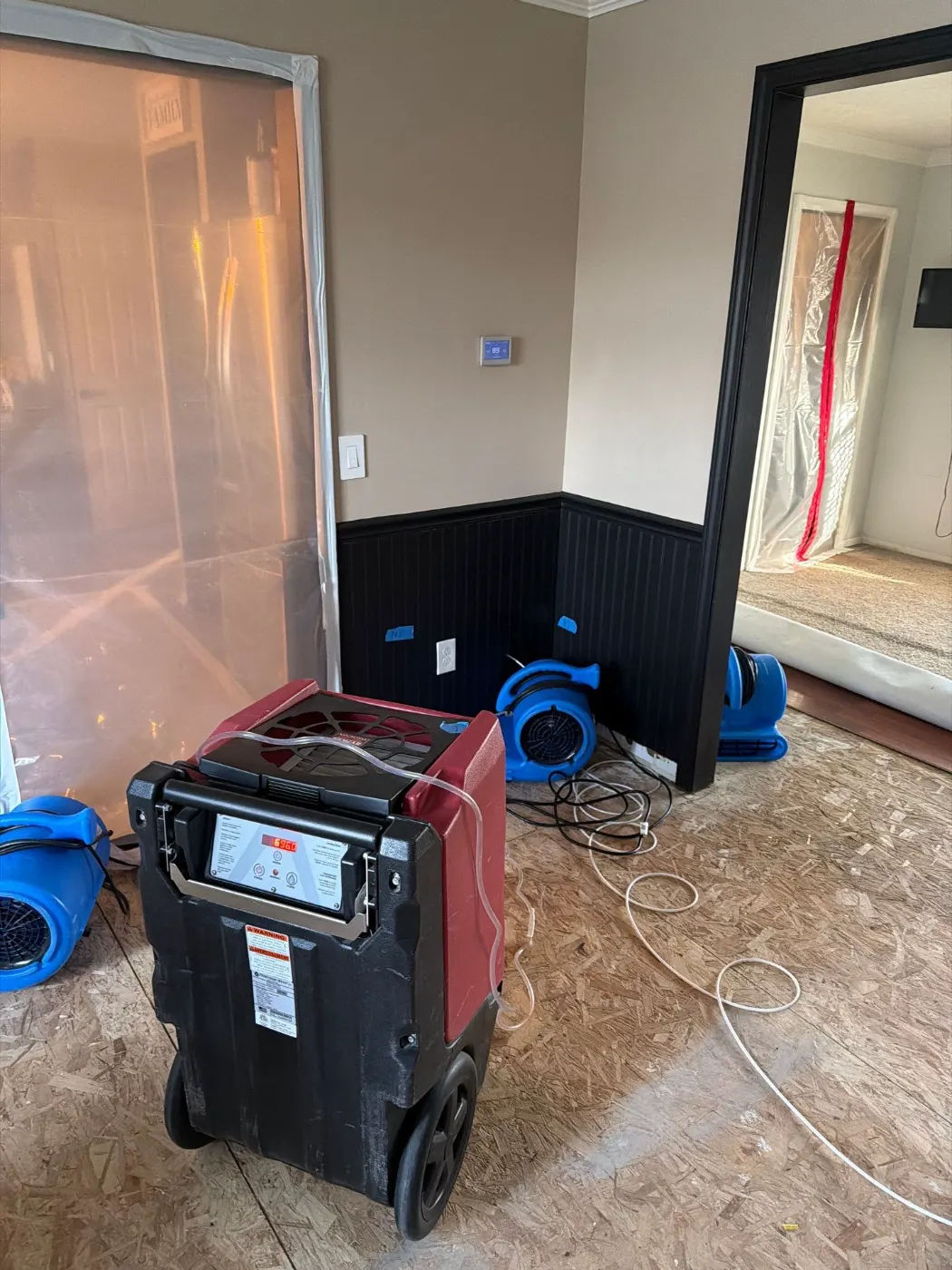
- Structural drying. Air movers and commercial dehumidifiers run 3 to 5 days with daily moisture readings logged for your adjuster.
- Clearance testing. Surface ATP testing or third party microbial sampling confirms the area is safe before rebuild.
If your basement was finished, this work overlaps with full basement flooding cleanup, and the rebuild phase often pairs with broader water damage restoration services like flooring and drywall.
Frequently Asked Questions
Is it safe to stay in my Butler-Tarkington home during sewage cleanup?
You can usually stay in unaffected floors of the home if the backup is contained to a basement and HVAC is shut down to that zone. Butler-Tarkington Water Restoration will tell you on arrival whether temporary relocation is the safer call, especially if anyone in the household has asthma or a weakened immune system.
How quickly can Butler-Tarkington Water Restoration respond to a sewage emergency?
Most Butler-Tarkington calls see a crew on site within 60 to 90 minutes, 24 hours a day. We keep trucks stocked and dispatched from Central Indiana so response time stays short even during regional storm events.
Will my homeowners insurance cover the cleanup?
Standard policies usually exclude sewer backup unless you carry a specific rider. If you do, Butler-Tarkington Water Restoration bills the carrier directly and handles documentation. We will help you check your declarations page before starting work.
Can you save my carpet or furniture after a sewage backup?
Carpet and pad that absorbed Category 3 water has to be removed under IICRC S500 guidelines. Solid wood furniture and hard goods can often be cleaned and saved. Upholstered pieces and particleboard typically cannot.
How long until my basement is fully restored?
Extraction and demolition usually take one to two days. Sanitizing and drying run another three to five days. Rebuild work, like new drywall and flooring, adds one to three weeks depending on materials and scheduling.
Have a restoration question?
Our IICRC certified Butler-Tarkington crew is ready to help. Free assessments, estimate based on what we can sees, no pressure.